

Emergency Bat Removal
It is 11:00 at night. The kids are in bed. The lights are all out. You and your spouse are settled onto the couch, watching Netflix. You notice movement out of the corner of your eye but think nothing of it. After another minute or so, a shadow swoops in front of your television. It’s a bat. You cover yourself with a blanket as your spouse runs to the other room and shuts the door. What do you do now?
At Waldner Wildlife, we hear stories like this all the time. A bat flying around your living room or bedroom is always unexpected and can be quite frightening. In situations like this, it is important to have someone who is able to come out and safely remove the animal. My phone is always near me, and I am generally on the road within 10 minutes of receiving an emergency call like this. We offer 24/7 Emergency Service for all wildlife removal.

What to do if there is a bat in your house
The first thing to do if you find yourself in this situation is to try to remain calm. The bat does not want to attack you and it is not after you. It is likely just lost and looking for a way to get out. Or, if it is wintertime, it is looking for somewhere to tuck away and go back to sleep.
I do not recommend that anyone attempt to capture a bat on their own and I certainly do not recommend attempting to kill it. While uncommon, bats are the primary carrier of Rabies in Michigan so interacting with them directly by someone inexperienced with doing so is risky. Instead, you should call a professional, like myself, to handle it for you.
What you can do is just keep an eye on it. If you are able to isolate it to just one room, than do that. Watch it fly into the room and close the door behind it. Be sure to check for gaps around the door, especially at the bottom. A towel stuffed into the gap between the door and floor will keep the bat from squeezing through.
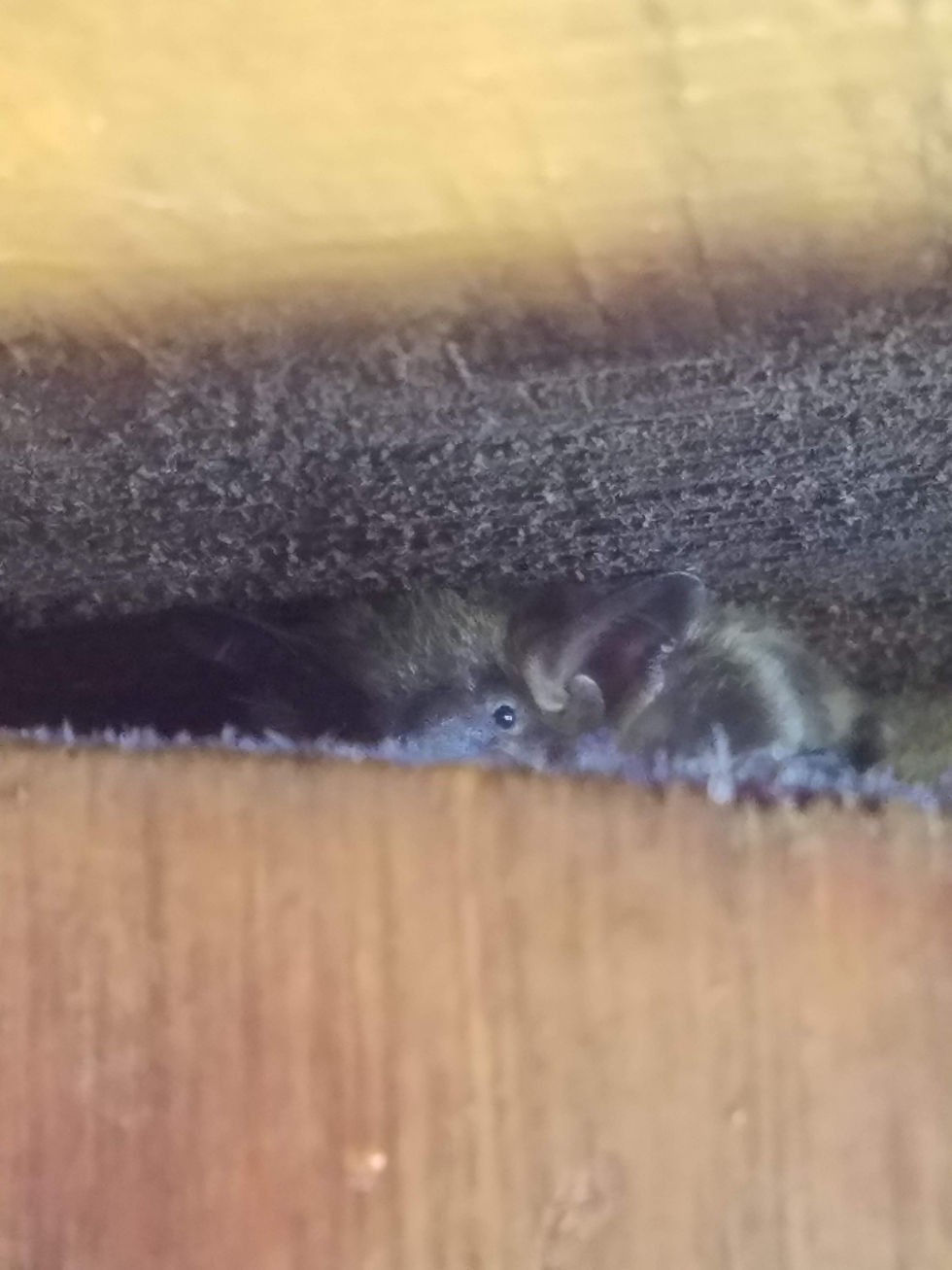
If the bat has landed somewhere, leave it there. Try to keep people and pets away from it so that it does not fly away to a more concealed location. This often is the case during the day when a bat has found a place to sleep. They will usually be content to stay in one place for hours before waking up to fly around again the next night.
It is also perfectly acceptable if you just want to get everyone out of the house as soon as possible. Many of my clients take this approach.
What to expect when we arrive
When I receive an Emergency Bat call in the middle of the night, I try to be out the door and on the road in 10 minutes or less. After that, the driving distance will determine how long it is before I arrive at your home. I live south of Owosso, so you can estimate from there. I can reach most Owosso addresses in 15-20 minutes. Laingsburg and Perry are also about 15-20 minutes. Arrival to East Lansing, Okemos, Durand, and Saint John’s is usually within 30-60 minutes.
When I arrive at a home with a bat inside the living space, one of the first things I will do is ask where you saw it last. Focusing on where it was last sighted helps me to expedite the search. There have even been times when I was able to see the bat immediately from the door.
If the bat is still actively flying around, I will attempt to capture it from the air with a net. It sometimes takes me a couple of tries, but it is fun.
Usually, by the time I get there the bat has found a spot to roost or hide and I need to go looking for it. I begin my search by doing a quick walkthrough and checking the most common hiding places- brick chimneys, curtains, ceiling fans, and crown molding. If my initial scan is unfruitful, then I begin a more thorough search. I will look under and behind everything as I work my way around each room. In an effort to move quickly, I often leave a mess of toys, blankets, and clothing behind me as I check each item for the intruder. These are actually the only times that I have ever been able to employ my training in Tactical Site Exploitation that I received in the Marine Corps.
The search continues until I either find the bat or have searched everywhere feasible to no avail. I am usually able to find the bat, but not always. Bats are great at disappearing and will tuck themselves away into sometimes inaccessible locations. If it finds its way into a basement or other storage room or unfinished space, the odds of locating it become very low. This is an unavoidable, disappointing aspect of these types of situations.
What to do with the captured bat
Whenever there is a bat in a living space and there has been potential exposure to humans or pets, the CDC recommends that it be tested for Rabies. This, unfortunately, requires that the bat be put down. A rabies test requires a dead animal so that the cerebral spinal fluid can be examined. For this reason, it is better to retain the bat to have it tested, as testing on live humans or pets is not possible.
When I capture a bat that is destined for Rabies testing, I euthanize it and place it in a bag labeled “Biohazard” for transportation. The bat then needs to be delivered to the Health Department. There is no charge from the Health Department for this service. They will just ask you a few questions and fill out an intake form. You can take the bat to them yourself, or I can do it for you for a fee.
How to prevent this scenario
Usually, when a bat finds its way into the living space of a home, it has been residing in the building for much longer. They live in colonies and will spend most of their time in an attic, going largely unnoticed. Often it is not until one gets lost that anyone even knows that they have been sharing their home with these creatures.
In addition to dealing with the immediate Emergency situation, we can evict any other bats from your home and seal any openings to prevent future infestations. Give us a call, and we’ll take care of the bats.


Comments